
Think of a storeman on your team whose back has been sore for a few weeks. He has not mentioned it, because the warehouse is busy and he does not want to make a fuss. He keeps lifting the way he always has and hopes it will settle.
Those quiet few weeks are what Occupational Health Awareness Week is about. It runs from 21 to 27 September 2026 and was started in 2021 by the Society of Occupational Medicine, the UK body for occupational health professionals. Most of the activity happens in the UK, but the theme applies just as well in Brunei. It is four words long: use occupational health early.
What Occupational Health Covers
Occupational health looks at how work affects a person’s health, and at how a person’s health affects the work they can safely do. Safety tends to deal with what could hurt someone today. Occupational health is more often about what builds up over months and years.
Noise wears down hearing. Dust and fumes settle in the lungs. Lifting and awkward postures wear out backs and shoulders. Pressure and long hours build until someone cannot face coming in. Heat is the exception, because it can bring someone down within a single shift.
Because the harm is gradual, it is easy to miss. The International Labour Organization estimates that close to nine in ten work-related deaths worldwide are caused by illness rather than accidents.
Why Timing Matters
The Society of Occupational Medicine opened the week with a simple comparison. Of workers referred to occupational health while they were still at work, nine in ten were still employed a month later. For those referred only after six months or more off sick, it was just over one in four.
The help on offer is much the same in each case. What changes is how long the problem has been left. A bad back or a hard patch, dealt with while someone is still coming in, usually stays manageable. Left for months, it can turn into a long absence, and a long absence is much harder to come back from, for the person and for you.
In Great Britain, about 1.9 million working people had a work-related illness in 2024/25, around half of them with stress, depression or anxiety. Yet only about half of British workers have occupational health available through their job. The Society’s warning at the launch was that Britain is “waiting until people are too sick to work”.
What This Means in Brunei
Brunei’s law already treats health as seriously as safety. Under the Workplace Safety and Health Act, Chapter 277, employers must, so far as is reasonably practicable, provide and maintain a work environment that is safe and without risk to health. The regulations under the Act spell out some of what that means. Workplaces must protect people from excessive heat. Where toxic substances are used, the air has to be tested by a competent person and exposure kept below permitted levels.
SHENA counts occupational disease alongside injuries and deaths at work. In each of the last two years it recorded two cases of disease, against more than a hundred reportable injuries. So far this year it has recorded none. That is unlikely to mean work rarely makes people ill here. An illness that appears years after the exposure is hard to recognise, and it is seldom traced back to the job.
What has changed recently is where you can turn for help. Since March 2025, SHENA has registered Designated Workplace Doctors. These are practising doctors with training in occupational health who carry out medical examinations and help workplaces monitor and manage the health risks of the work. The register is on SHENA’s website, and for an employer in Brunei it is the most direct way to act on this year’s theme.
Mental health belongs in this too. SHENA’s Safety Month 2026, launched in April, was about the psychosocial side of work, meaning things like excessive workload, unclear roles, harassment and prolonged stress. At the launch, the Deputy Minister who chairs SHENA’s board called mental wellbeing “a fundamental pillar of a strong safety culture”. If someone on your team needs to talk to somebody, Talian Harapan 145, the Ministry of Health’s line, is free and confidential, and it is open around the clock.
Local conditions add their own pressure. Brunei is hot and humid all year, and in May 2025, when several areas recorded 35°C or more, SHENA reminded employers about heat stress. This month’s haze has added another hazard for anyone working outdoors. The national health survey of 2015 and 2016 also found that more than a quarter of adults were obese, and the same share had high blood pressure. Most of that is not caused by work, but it does affect how well someone copes with heavy work in the heat.
What You Can Do
None of this needs a clinic on site. Most of it comes down to noticing sooner and knowing who to ask.
- Put health on the risk assessment. Noise, dust, chemicals, heat, manual handling, screen work, night shifts and heavy workloads all belong in the risk assessment, next to the safety hazards.
- Check where there is exposure. If people work around loud noise or with chemicals, ask a Designated Workplace Doctor whether they need health checks such as hearing tests, and how often.
- Make it easy to speak up. People hide symptoms when they expect to be judged or to lose pay. A supervisor who asks how someone is getting on, and means it, will usually hear about a problem while it is still small. The World Health Organization recommends training managers to recognise distress and point people towards support, not to diagnose it.
- Get advice early. If someone’s health is affecting their work, or their work is affecting their health, ask for an occupational health opinion while they are still at work, before the MCs start piling up.
- Plan the return. Keep in touch during a long absence. Lighter duties for a while or a phased return can help someone come back safely.
- Watch the hours. Working 55 hours or more a week led to close to three quarters of a million deaths from stroke and heart disease worldwide in 2016, according to the World Health Organization and the International Labour Organization.
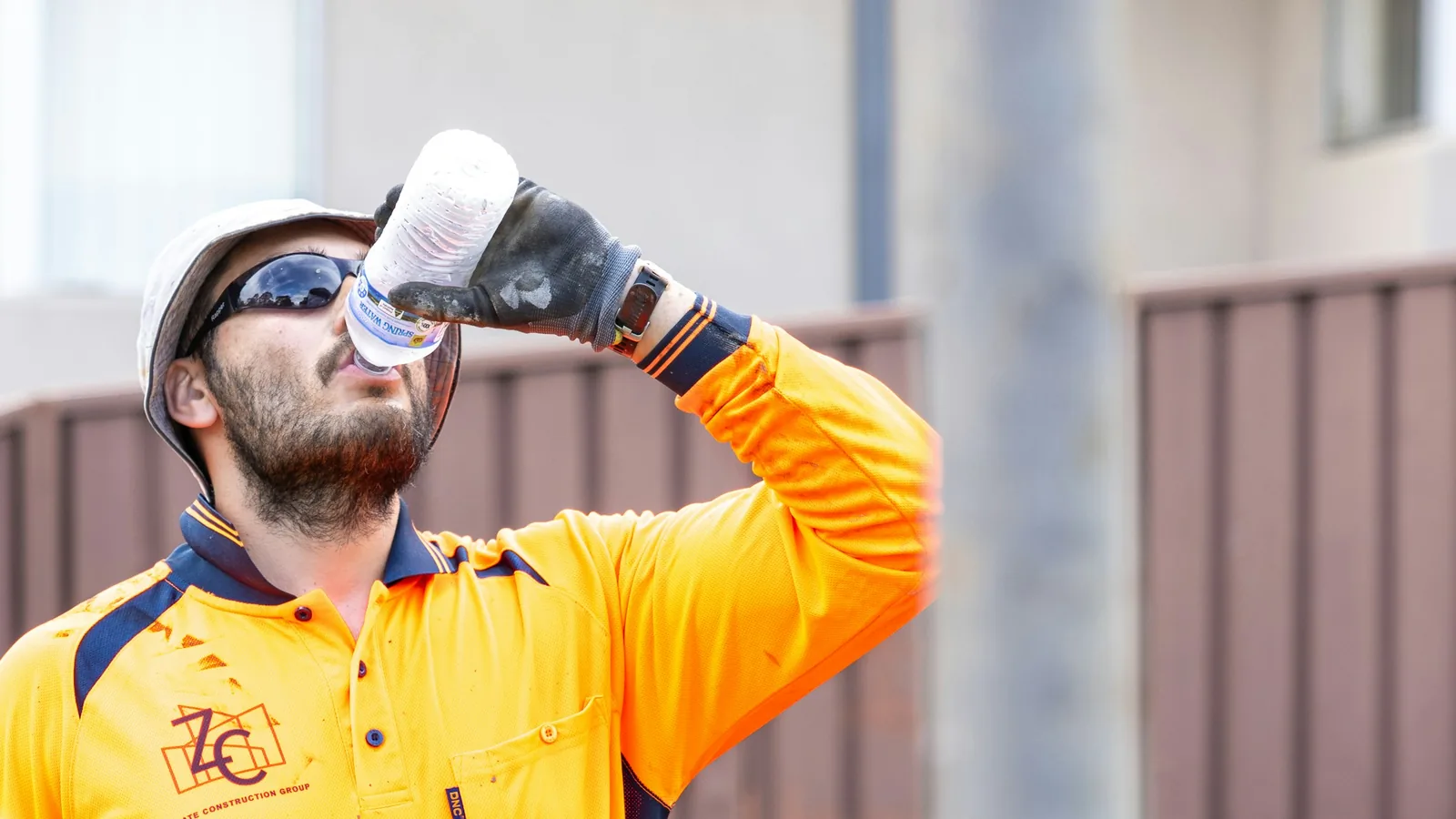
- Plan for heat. Make sure people have water, shade, rest breaks and time to get used to the heat, and move the heaviest work to cooler hours where you can.
Occupational health can sound like a specialist subject for large companies. Mostly, it is a matter of asking in time. The storeman with the sore back probably does not need a hospital. He needs someone to ask how he is doing, this week rather than six months from now.
Sources
- Society of Occupational Medicine: Occupational Health Awareness Week 2026, the 2026 campaign brief, and Britain “waiting until people are too sick to work”, 21 September 2026
- Health and Safety Executive: Key figures for Great Britain, 2024 to 2025
- Department for Work and Pensions: Survey of Employees and Self-Employed Workers, 2024 to 2025, January 2026
- International Labour Organization: A call for safer and healthier working environments, 2023
- World Health Organization and International Labour Organization: Long working hours increasing deaths from heart disease and stroke, 2021
- World Health Organization: Guidelines on mental health at work, 2022
- SHENA: Statistics Dashboard; 2025/NTI/01, Commencement of the Registration of Designated Workplace Doctor, 24 March 2025; Designated Workplace Doctor register; 2025/NTI/07, Reminder to Manage Risks of Heat Stress and Flash Floods in the Workplace, 22 May 2025; 2024/NTI/09, Minimum Requirements of Competent Person, 25 October 2024
- SHENA: Safety Month 2026 launch, 28 April 2026
- Ong SK and others: STEPS Population Survey of Noncommunicable Diseases and Risk Factors in Brunei Darussalam 2016, Asia Pacific Journal of Public Health, 2017
- Borneo Bulletin: Hope Line 145 to operate around the clock